This website uses cookies to ensure you get the best experience on our website, to read more about the cookies we use, please read our cookies policy.

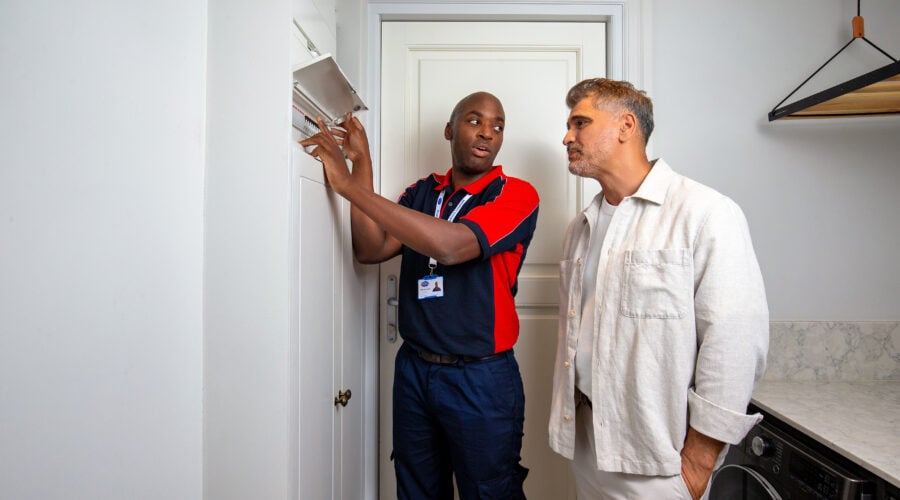
If your lights flicker occasionally, it might not always be a cause for concern. However, if it’s happening regularly or affecting multiple lights, it could indicate an electrical problem that needs attention.
Flickering lights can be caused by something as simple as a loose bulb, but they can also point to a faulty light fitting, loose wiring, an overloaded circuit or a problem with the electricity supply.
While some causes are relatively minor, others can pose a safety risk if left unresolved.
Why do my lights keep flickering?
There are several common reasons why lights flicker in a home.
A loose light bulb
The simplest explanation is that the bulb isn’t fitted securely.
If only one light is flickering, switch it off and allow it to cool before checking that the bulb is tightened correctly or replacing it with a new one if necessary.
A faulty light fitting
Light fittings can wear out over time.
Loose internal connections or ageing components may cause the light to flicker even after replacing the bulb.
If the problem continues, the fitting should be inspected by a qualified electrician.
An overloaded circuit
If your lights flicker when a high-powered appliance is switched on, there may be an issue with the circuit or electrical supply. A brief change in brightness can sometimes occur, but regular or severe flickering should be investigated.
Loose electrical wiring
Loose wiring is one of the more serious causes of flickering lights.
Faulty connections can interrupt the electrical supply and, in some cases, increase the risk of overheating or electrical fires.
If multiple lights are flickering or you notice burning smells, buzzing sounds, or sparking, switch off the affected circuit if it’s safe to do so and contact an electrician immediately.
Problems with the consumer unit
If flickering lights are accompanied by a consumer unit that keeps tripping, there may be a fault somewhere in your electrical system.
Repeated tripping should never be ignored and requires professional investigation.
Problems with the electricity supply
Occasionally, flickering lights may be caused by an issue with the electricity supply rather than your home’s wiring.
If your neighbours are experiencing the same problem, it may be worth checking whether there’s a local power issue before arranging repairs.
What does it mean if only one light is flickering?
If only one light is flickering, the problem is more likely to be with the bulb, light fitting or connection serving that particular light.
Start by switching the light off and allowing the bulb to cool. Check that it’s fitted securely or replace it with a suitable new bulb. If the flickering continues, the light fitting or wiring may need to be inspected by an electrician.
If several lights are flickering at the same time, particularly in different rooms, the problem may be affecting a circuit or a wider part of the electrical system rather than an individual light.
What should I do if my lights are flickering?
If only one light is affected, switch it off and allow the bulb to cool before checking that it’s fitted securely. You can also try replacing it with a suitable new bulb to see whether that solves the problem.
If the flickering continues, affects several lights or is accompanied by other electrical problems, don’t attempt to investigate the wiring or light fitting yourself.
Burning smells, sparking, unusual heat or buzzing sounds can indicate a more serious electrical fault. Stop using the affected fitting or circuit if it’s safe to do so and arrange for an electrician to investigate.
When should I call an electrician?
Arrange for an electrician to investigate if flickering continues after you’ve checked or replaced the bulb, several lights are affected, or your consumer unit repeatedly trips.
Burning smells, sparking, unusual heat or buzzing from electrical fittings require more urgent attention. Don’t continue using an affected fitting or circuit if you suspect there may be an electrical fault.
Frequently Asked Questions
Is it normal for lights to flicker occasionally?
A brief flicker can sometimes happen when large appliances are switched on. However, frequent or persistent flickering isn’t considered normal and should be investigated.
Are flickering lights dangerous?
They can be. While a loose bulb is usually straightforward to fix, flickering caused by loose wiring or electrical faults may present a fire or electric shock risk if left unresolved.
Why do my lights flicker when I use the kettle?
High-powered appliances draw a significant amount of electricity. If your lights regularly dim or flicker when they’re switched on, it could indicate an issue with the circuit, wiring or electrical supply.
Should I ignore flickering lights?
No. If replacing the bulb doesn’t solve the problem or multiple lights are affected, it’s best to arrange an inspection before the issue worsens.
Need help with flickering lights?
If you’ve replaced the bulb and the flickering continues, or several lights are affected, an electrician can identify whether the problem is with a fitting, circuit, wiring or another part of the electrical system.
Our experienced electricians are available 24 hours a day, 7 days a week across London to identify the cause of flickering lights, repair electrical faults, and help keep your home safe.
Contact Pimlico Plumbers today to book an electrician or request emergency electrical assistance.
Summary
Flickering lights can be caused by something as simple as a loose or faulty bulb, but persistent flickering can also indicate a problem with a light fitting, wiring, circuit or electricity supply.
If only one light is affected, checking or replacing the bulb is a sensible first step. If several lights are flickering, the problem keeps returning, or you notice burning smells, buzzing or sparking, arrange for an electrician to investigate.