This website uses cookies to ensure you get the best experience on our website, to read more about the cookies we use, please read our cookies policy.

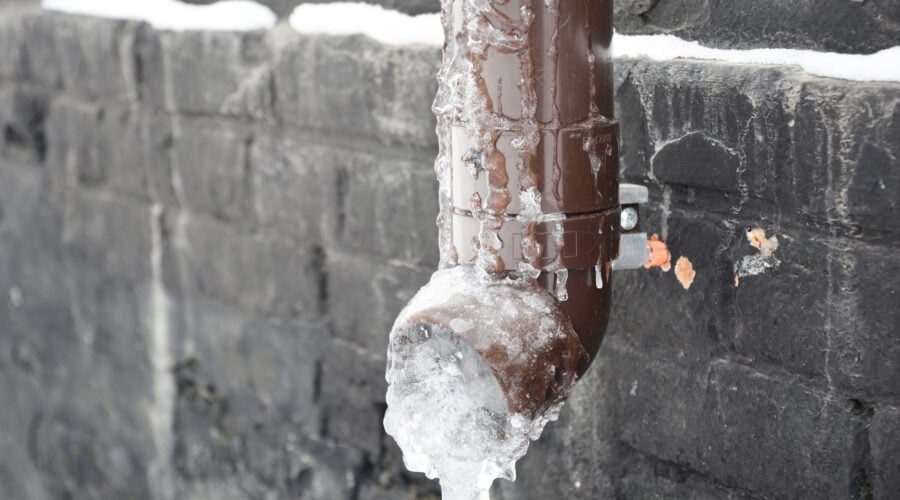
Frozen pipes are a common plumbing problem during cold weather. If the water inside a pipe freezes, it can put additional pressure on the pipework and increase the risk of a leak or burst pipe.
The best way to protect your plumbing is to prepare before temperatures fall. Insulating exposed pipes, protecting outdoor taps and keeping your home heated during freezing weather can all help reduce the risk.
If a pipe does freeze, it may be possible to thaw it yourself if it’s accessible and undamaged. The important thing is to warm the pipe gradually. Never use a naked flame, blowtorch or another source of extreme heat.
Remember that a frozen pipe may already have been damaged. A split can remain hidden while the water inside is frozen, with the leak only becoming apparent once the ice starts to thaw.
Why do pipes freeze?
Pipes can freeze when the water inside them becomes cold enough to turn to ice, with the risk increasing during prolonged periods of sub-zero temperatures.
As the water freezes, pressure can build inside the pipework. If this causes damage, you may not realise there’s a problem until temperatures rise, the ice thaws and water starts flowing again.
Pipework is generally more vulnerable in colder or poorly insulated parts of a property. This can include lofts, garages, basements and pipes running close to external walls. Outdoor taps and exposed external pipework can also be particularly vulnerable.
Even pipework inside the home can be affected if it’s located in a cold cupboard or another area where warm air doesn’t circulate easily.
Knowing where these vulnerable areas are before winter arrives gives you an opportunity to protect them.
How can I prevent my pipes from freezing?
Start by looking at any pipework that’s exposed to particularly cold conditions.
Pipe insulation, commonly known as pipe lagging, can help protect vulnerable pipes. Pay particular attention to pipework in lofts, garages, cupboards and other unheated spaces.
Existing insulation is worth checking too. Gaps, damage or sections that have come loose can leave parts of the pipe exposed.
Outdoor taps also need attention before winter. Disconnect garden hoses when they’re no longer needed and consider using an insulated cover over the tap. Exposed external pipework may also benefit from suitable insulation.
Keeping some heat in your property during freezing weather can also reduce the risk. This is particularly important if you’re going away and would otherwise switch the heating off completely.
Should I leave the heating on to stop pipes freezing?
Keeping your home heated during particularly cold weather can help reduce the likelihood of pipes freezing.
If you’re going away during winter, consider leaving the heating operating at a lower setting rather than switching it off completely.
The appropriate setting will depend on your property and heating system, so follow the manufacturer’s instructions for your boiler, heating controls and thermostat.
Remember that the temperature in one room doesn’t necessarily reflect the temperature around all of your pipework. Pipes in lofts, garages and other unheated spaces can be much colder than the main living areas.
Insulation is therefore still important even when the heating is running.
Should I leave taps dripping to stop pipes freezing?
You may see advice suggesting that leaving a tap dripping can help reduce the risk of freezing.
However, this shouldn’t be treated as a replacement for properly protecting vulnerable pipework.
Insulating exposed pipes, maintaining some heat within the property and protecting outdoor taps are more practical preventative measures.
If you’re concerned about a particular section of pipework repeatedly freezing, it’s worth finding out why it’s becoming so cold rather than relying on a running tap whenever temperatures fall.
How do I protect outdoor taps from freezing?
Outdoor taps are particularly exposed to cold weather, so preparing them before winter can help reduce the risk of problems.
Disconnect any garden hoses that are still attached. Water left within a hose or fitting can freeze when temperatures drop.
A suitable insulated outdoor tap cover can provide additional protection.
If there’s exposed pipework leading to the tap, check whether it can also be appropriately insulated.
Don’t wait until the tap has already frozen to think about protection. Preparing exposed plumbing before prolonged cold weather arrives is much easier than dealing with a frozen or burst pipe afterwards.
Can draughts cause pipes to freeze?
Cold air reaching vulnerable pipework can increase the likelihood of freezing.
Check areas where pipes pass through walls, floors or cupboards for unnecessary gaps that allow very cold air to reach them.
Suitable gaps may be sealed to reduce draughts, but take care not to block ventilation that’s required for an appliance or for the property itself.
If you’re unsure whether a particular opening is there for ventilation, don’t simply seal it.
What should I do if I’m going away during winter?
Don’t forget about your plumbing simply because nobody will be using the property.
A house that’s left unheated during a period of freezing weather can leave pipework particularly vulnerable.
Consider keeping the heating operating at a suitable low setting and make sure exposed pipes are properly insulated before you leave.
It’s also useful to know where your stopcock is and make sure it’s accessible.
If someone is checking your home while you’re away, ask them to look out for obvious signs of a plumbing problem, particularly following a prolonged period of very cold weather.
Why should I know where my stopcock is?
Knowing where your stopcock is won’t prevent a pipe from freezing, but it could make a significant difference if one bursts.
The stopcock allows you to shut off the mains water supply to your property.
Finding it for the first time while water is already escaping wastes valuable time, so locate it before you need it.
Make sure you know how it operates and that you can access it easily. Avoid covering it with stored items or placing furniture where it becomes difficult to reach.
How do I know if a pipe is frozen?
One of the most common signs is little or no water coming from a tap during freezing weather.
You may find that one particular tap or area of the property has lost its water supply while other taps continue to work normally.
Accessible pipework may also have visible frost or ice on it.
However, a lack of water doesn’t automatically mean a pipe has frozen. There can be other reasons for losing your water supply.
If you can safely access the suspected pipe, look for anything that suggests it has already been damaged, including cracks, splits or water escaping from the pipework.
If you’re unsure what’s causing the problem or can’t safely locate the frozen section, have the plumbing checked rather than attempting to thaw pipework at random.
What should I do first if I think a pipe has frozen?
Before trying to thaw anything, check the accessible pipework for signs of damage.
If you can see a split, crack or leak, don’t continue trying to thaw the pipe. Turn off the water supply at the stopcock if it’s safe to do so and arrange for a plumber to repair the damage.
If the pipe appears intact and you can safely identify and access the frozen section, you may be able to thaw it gradually.
Open the affected tap slightly before you start. This gives melting water somewhere to escape as the ice begins to thaw.
Don’t force fittings, strike the pipe or try to break up the ice inside it.
How do I safely thaw a frozen pipe?
If the pipe appears undamaged and is safely accessible, apply gentle heat gradually.
A warm towel can be wrapped around the affected section. A hairdryer on a low setting may also be suitable if it’s safe to use electrical equipment in the area.
Move the heat gradually along the frozen section rather than concentrating high temperatures on one small area.
As the pipe warms, keep checking it and the surrounding area for signs of water.
Once the tap begins running normally again, continue inspecting the pipework. A crack may only become apparent once the ice has melted and water pressure returns.
If you can’t identify where the pipe is frozen or it runs through a wall, floor or another inaccessible area, don’t start removing parts of your property to find it. Contact a plumber instead.
What should I never use to thaw a frozen pipe?
Never use a blowtorch, naked flame or another source of extreme heat.
A naked flame creates an obvious fire risk and could also damage the pipe and surrounding materials.
Avoid trying to heat the pipe as quickly as possible.
Frozen plumbing should be warmed gradually so you can monitor the pipe and react if a leak appears as the ice thaws.
Be particularly careful with electrical equipment. Don’t use a hairdryer or another electrical appliance where there’s water present or where you can’t use it safely.
How long does it take a frozen pipe to thaw?
There’s no fixed time because it depends on how much of the pipe is frozen, its location and the surrounding temperature.
An accessible section may begin thawing relatively quickly when gentle heat is applied, while a pipe that’s frozen over a larger area can take longer.
Don’t increase the heat simply because the process is taking longer than expected.
If the pipe isn’t beginning to thaw, you can’t locate the frozen section, or you’re concerned that it may have been damaged, stop and contact a plumber.
Can a frozen pipe burst while it’s thawing?
Damage caused by freezing may only become obvious during or after thawing.
A pipe can develop a split while the water inside is frozen, but the ice can temporarily restrict the amount of water escaping.
As the ice melts and water starts moving through the pipe again, the damaged section may begin leaking.
This is why you should stay with the pipe while you’re thawing it and inspect the surrounding area carefully once the water starts flowing.
Don’t simply thaw the pipe and walk away.
What should I do if a frozen pipe has burst?
If you discover that a pipe has burst, turn off the water supply at the stopcock as soon as it’s safe to do so.
This can help limit the amount of water escaping into your property.
A burst pipe will need to be repaired before the water supply can be safely restored. Even a relatively small split can release a significant amount of water once the ice has thawed.
If water is close to sockets, appliances, the fuse box or other electrical equipment, don’t touch the affected electrical equipment.
Where water and electrics are involved, urgent professional assistance may be required.
What should I check after a frozen pipe has thawed?
Don’t assume everything is fine simply because the tap has started running again.
Check the accessible pipework and surrounding area carefully for signs of leakage. Look for dripping water, damp patches or moisture appearing around joints.
Continue to monitor the area afterwards, as a small leak may not always be immediately obvious.
If you notice water escaping, turn off the supply if necessary and arrange for the damaged pipework to be repaired.
Can a frozen pipe affect my boiler or central heating?
Frozen pipework can sometimes affect a heating system, depending on which pipe has frozen.
One example is a frozen boiler condensate pipe. This can prevent some boilers from operating correctly during cold weather.
If your boiler stops working during freezing conditions, check the display for any fault code or warning and follow the manufacturer’s instructions.
Don’t remove boiler covers or attempt work inside the appliance.
If you’re unsure whether the problem is a frozen pipe or a fault with the heating system itself, arrange for a Gas Safe heating engineer to investigate.
Is there anything I can safely do myself?
Yes. Many of the most useful preventative steps can be carried out before there’s a problem.
You can check accessible pipe insulation, protect outdoor taps, disconnect garden hoses, keep your home appropriately heated and make sure you know where the stopcock is.
If an accessible pipe freezes but appears undamaged, you may also be able to thaw it gradually using gentle heat.
The important thing is knowing when to stop.
If you can’t locate the frozen section, can’t safely reach it, notice a crack or leak, or are unsure what’s underneath or around the pipework, contact a plumber rather than attempting a more invasive repair.
Frequently Asked Questions
At what temperature do pipes freeze?
The risk increases during prolonged periods of sub-zero temperatures, particularly when pipework is exposed to cold air or located in an unheated part of the property.
The temperature immediately around the pipe is what matters, so insulation and location can make a significant difference.
Which pipes are most likely to freeze?
Pipes in colder and less insulated parts of a property are generally more vulnerable.
This can include pipework in lofts, garages, basements and close to external walls, as well as outdoor taps and exposed external pipes.
Does pipe insulation stop pipes freezing?
Insulation can reduce the risk by slowing heat loss from the pipe, making it particularly useful for plumbing in colder or unheated areas.
However, insulation doesn’t guarantee that a pipe can never freeze, particularly during prolonged periods of very low temperatures.
Can I use a hairdryer to thaw a frozen pipe?
A hairdryer on a low setting may be used to apply gentle heat to an accessible frozen pipe, provided the pipe appears undamaged and it’s safe to use electrical equipment in the area.
Never use one where water is present or there’s a risk of contact between electricity and moisture.
Should I pour boiling water over a frozen pipe?
Avoid using boiling water or another source of extreme heat.
The aim is to warm the pipe gradually and safely while checking for signs that it has been damaged.
A warm towel or another appropriate source of gentle heat is a safer approach for accessible, undamaged pipework.
How do I know if a frozen pipe has burst?
You may see a crack or split in the pipe, but damage isn’t always obvious while the pipe remains frozen.
A leak can become apparent as the ice melts and water begins flowing again, which is why the pipe should be monitored closely while it’s thawing.
Will frozen pipes thaw on their own?
They can as the surrounding temperature rises, but that doesn’t mean you should ignore them.
If freezing has damaged the pipe, a leak may begin once the ice melts.
If you know or suspect that a pipe is frozen, check the accessible pipework and be prepared to turn off the water if a leak appears.
What should I do after thawing a frozen pipe?
Once water starts flowing normally, inspect the pipe and surrounding area for signs of leakage.
Continue to monitor it afterwards because freezing can damage pipework even when a crack wasn’t initially visible.
When should I call a plumber for a frozen pipe?
Contact a plumber if the pipe has burst or is leaking, you can’t locate or safely access the frozen section, or you’re unsure how to thaw it safely.
You should also get professional help if the pipe doesn’t begin thawing with gentle heat or you’re concerned that damage may be hidden.
Need Help With Frozen or Burst Pipes?
Frozen pipes can quickly become a more serious plumbing problem if the pipework has split or starts leaking as it thaws.
Pimlico Plumbers is available 24 hours a day, 7 days a week across London for urgent plumbing problems, including frozen and burst pipes.
With plumbers available across London, we aim to respond quickly when a problem can’t wait.
Got a frozen or burst pipe? Contact Pimlico Plumbers to book a plumber.
Summary
You can reduce the risk of frozen pipes by insulating exposed pipework, protecting outdoor taps and keeping some heat in your property during freezing weather.
It’s also worth identifying vulnerable pipework before winter and making sure you know where your stopcock is in case a pipe bursts.
If a pipe freezes, check it for signs of damage before attempting to thaw it. An accessible, undamaged pipe can be warmed gradually using gentle heat, but never use a naked flame, blowtorch or extreme heat.
Stay with the pipe while it thaws and check carefully for leaks once water starts flowing again. A split may not become obvious until the ice has melted.
If the pipe has burst, you can’t safely access the frozen section, or you notice water escaping, turn off the water supply if necessary and contact a plumber.