This website uses cookies to ensure you get the best experience on our website, to read more about the cookies we use, please read our cookies policy.

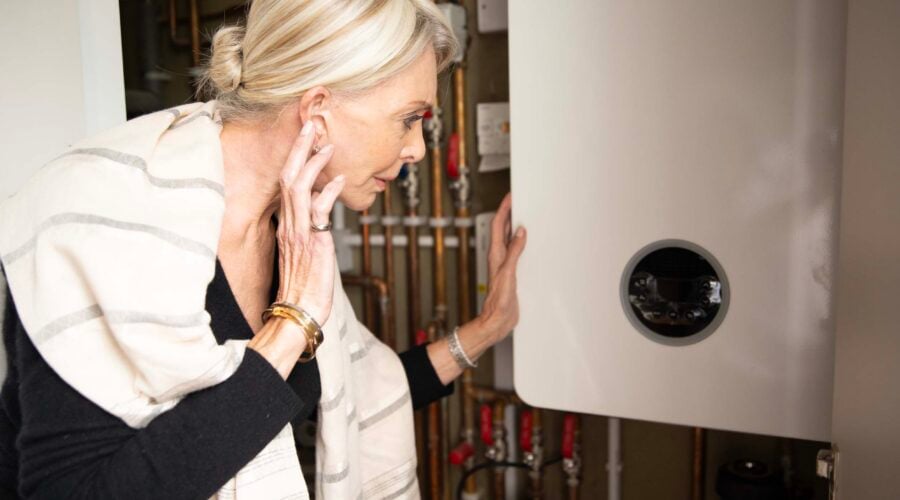
If your boiler pressure keeps dropping, it usually means water is escaping from the heating system, or there’s a problem with one of the boiler’s components.
Common causes of low boiler pressure include a leak in the heating system, recently bled radiators, a faulty pressure relief valve, or an expansion vessel problem.
A small, occasional pressure drop isn’t necessarily an emergency. However, if you’re regularly repressurising your boiler, there’s likely to be an underlying problem that needs investigating.
What pressure should my boiler be?
For many sealed central heating systems, the pressure gauge should read approximately 1 to 1.5 bar when the heating is off.
When your heating is switched on, the pressure will normally rise slightly, around 0.5 bar, as the water heats and expands.
However, the correct pressure varies between boilers, so always check the manufacturer’s instructions for your particular model.
If the pressure drops too low, your boiler may display a fault code or stop providing heating and hot water.
Why does my boiler pressure keep dropping?
There are several possible causes.
1. There’s a leak somewhere in the heating system
Even a small leak can gradually reduce the pressure in your central heating system.
Check accessible areas around:
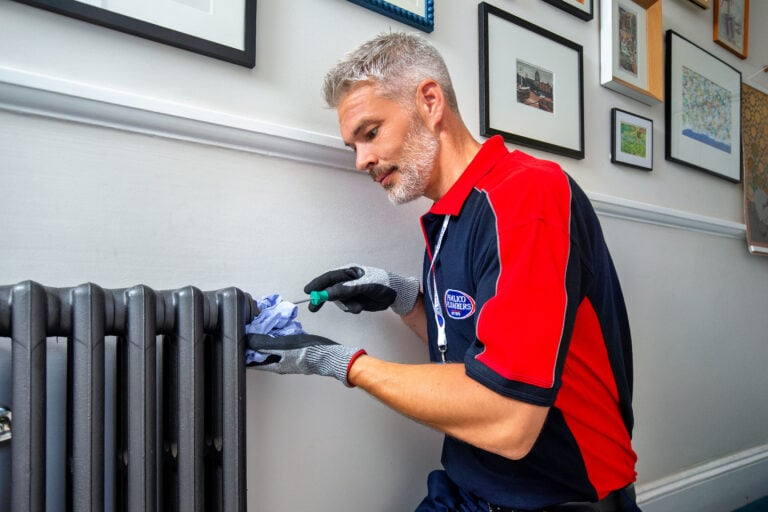
- Radiators
- Radiator valves
- Visible pipework
- The boiler
- Towel rails
Look for dripping water, damp patches, staining, or corrosion.
Don’t remove the boiler casing to look for leaks. Any suspected internal boiler fault should be investigated by a Gas Safe-registered engineer.
2. You’ve recently bled your radiators
Bleeding a radiator releases trapped air, but a small amount of water may also leave the system.
As a result, you may notice the boiler pressure has fallen.
Depending on your boiler, you may need to repressurise the system following the manufacturer’s instructions.
3. There’s a problem with the pressure relief valve
The pressure relief valve (PRV) is a safety component designed to release water if pressure inside the system becomes too high.
If the valve develops a fault or doesn’t reseal correctly, water can escape and cause the boiler pressure to fall.
One possible sign is water dripping from the external discharge pipe.
This requires professional investigation.
4. The expansion vessel has a problem
Your boiler’s expansion vessel helps accommodate the expansion of water as your heating system warms up.
If there’s a problem with it, you may notice the boiler pressure rises significantly when the heating is on and then drops again as the system cools.
Expansion vessel problems should be diagnosed and repaired by a Gas Safe-registered engineer.
5. There may be a hidden leak
Not every central heating leak is easy to see.
Pipework can run beneath floors, behind walls, and through ceilings. If the pressure repeatedly falls but there’s no obvious leak, further investigation may be required.
Can I fix low boiler pressure myself?
In some cases, you may be able to repressurise the boiler yourself, provided your boiler manufacturer says this is something the user can do.
The process varies between models and may involve a filling loop, filling key, or another built-in mechanism.
Always follow the manufacturer’s instructions for your specific boiler.
Don’t keep topping up the pressure if it repeatedly falls. Repressurising restores the pressure, but it doesn’t fix whatever is causing the water loss.
What should I do if my boiler pressure keeps dropping?
If your boiler pressure keeps dropping, start by checking the pressure against the range recommended by the manufacturer. You can also look around accessible radiators, valves and visible pipework for signs of water, damp or corrosion that could indicate a leak.
If the pressure is too low and your boiler’s instructions allow it, you may be able to repressurise the system yourself. Once you’ve done this, keep an eye on the pressure gauge to see whether it remains stable.
If the pressure falls again, avoid repeatedly topping up the system. Repressurising restores the correct pressure, but it doesn’t resolve the reason it was lost in the first place. Recurring pressure loss is a sign that the heating system or boiler should be checked by a Gas Safe-registered engineer.
When should I call a heating engineer?
Arrange professional help if:
- Your boiler repeatedly loses pressure
- You’re regularly having to repressurise it
- You can see water leaking from the boiler
- There’s water coming from the pressure relief discharge pipe
- Pressure rises dramatically when the heating comes on
- The boiler won’t maintain the manufacturer’s recommended pressure
- You can’t find an obvious reason for the pressure loss
- Your boiler repeatedly shuts down because of low pressure
A Gas Safe-registered engineer can identify whether the problem is with the boiler itself or elsewhere in the heating system.
Is a boiler losing pressure an emergency?
Not necessarily. A gradual pressure drop usually doesn’t require an emergency call-out, particularly if there’s no visible leak and the boiler is otherwise operating normally.
However, seek urgent professional assistance if there’s significant water leakage, water is affecting electrical equipment, or the boiler has developed another potentially unsafe fault.
If you smell gas, don’t try to investigate the boiler yourself. Leave the property and follow the official gas emergency procedure.
Frequently Asked Questions
Why does my boiler lose pressure overnight?
A small leak may cause pressure to fall gradually while the heating isn’t being used. A faulty component within the heating system could also be responsible. If it happens repeatedly, arrange an inspection.
Why does my boiler pressure drop after bleeding radiators?
Bleeding radiators removes air and can reduce system pressure. You may need to repressurise the boiler afterwards according to the manufacturer’s instructions.
Why does my boiler pressure keep going from high to low?
A large change between hot and cold pressure can indicate a problem with the expansion vessel or another part of the heating system and should be professionally investigated.
How often should I need to repressurise my boiler?
You shouldn’t normally need to repressurise a healthy system frequently. If you’re regularly topping it up, there’s likely to be an underlying issue.
Can a leaking radiator cause boiler pressure to drop?
Yes. Because radiators form part of the sealed central heating system, even a small leak from a radiator, valve, or connected pipework can gradually reduce boiler pressure.
Need help with a boiler losing pressure?
If you keep topping up your boiler only for the pressure to fall again, it’s worth finding out why.
Our network of Gas Safe-registered heating engineers can diagnose boiler and central heating faults across London, identify leaks, and repair problems causing repeated pressure loss.
For urgent heating and boiler problems, assistance is available 24 hours a day, 7 days a week.
Contact us to book a heating engineer and get to the bottom of recurring boiler pressure problems.
Summary
If your boiler is losing pressure, the most common causes include a leak somewhere in the heating system, recently bled radiators, a faulty pressure relief valve, or an expansion vessel problem.
Check the boiler’s recommended pressure and look for visible leaks around accessible radiators, valves, and pipework. If appropriate for your boiler, you may be able to repressurise it by following the manufacturer’s instructions.
However, a boiler that repeatedly loses pressure shouldn’t simply be topped up again and again. Persistent pressure loss usually indicates an underlying fault or leak that needs to be identified and repaired by a professional.