
I Have Hot Water but No Heating – What Should I Do?
If your hot water is working but your radiators are staying cold, it usually means the combination boiler can still heat water, but something is stopping your central heating from working as it should.
The cause could be something relatively simple, such as the thermostat or heating timer being set incorrectly. Low boiler pressure, trapped air or closed radiator valves can also cause problems. In other cases, there may be a fault with the heating controls, pump, valves or boiler itself.
If you need a qualified professional to come and fix this today, please get in touch. If you’d like to have a look yourself before calling in a Gas Safe-registered heating engineer, there are a few straightforward checks you can make.
Why do I have hot water but no heating?
Having hot water but no heating can happen for several reasons. If water from your taps is heating normally, start with the controls and components responsible for your central heating.
1. Check your thermostat
First, take a look at your thermostat. If it isn’t calling for heat, your boiler may not know that the radiators need warming up.
Make sure:
- The thermostat is switched on
- Heating mode is selected
- The target temperature is higher than the current room temperature
- The batteries haven’t run out if you have a wireless thermostat
Turn the temperature up by a few degrees and give the system a little time to respond.
2. Check your heating timer or programmer
The next thing to check is your heating schedule.
Make sure the central heating hasn’t been switched off or programmed to come on at a different time. Power cuts, clock changes and accidental changes to the programmer can all affect your usual schedule.
As a quick test, temporarily switch the heating to manual or constant mode. If the radiators start warming up, the problem may simply be with the timer settings.
3. Check the boiler pressure
Boiler pressure that’s too low can stop some heating systems from working properly.
Many sealed heating systems sit at around 1 to 1.5 bar when they’re cold, but this varies between boilers. Check the manufacturer’s instructions for the correct pressure range for your model before making any adjustments.
If you repressurise the boiler and the pressure soon drops again, avoid repeatedly topping it up. A continual loss of pressure could indicate a leak or another problem that needs to be investigated.
4. Take a look at the radiator valves
If most of your heating is working but one or two radiators are cold, check the valves on the affected radiators.
Make sure they haven’t been turned off accidentally. If the radiator has a thermostatic radiator valve (TRV), turn it up and see whether the radiator begins to heat.
TRVs can occasionally stick too, which may leave an individual radiator cold even when the rest of the heating system is working.
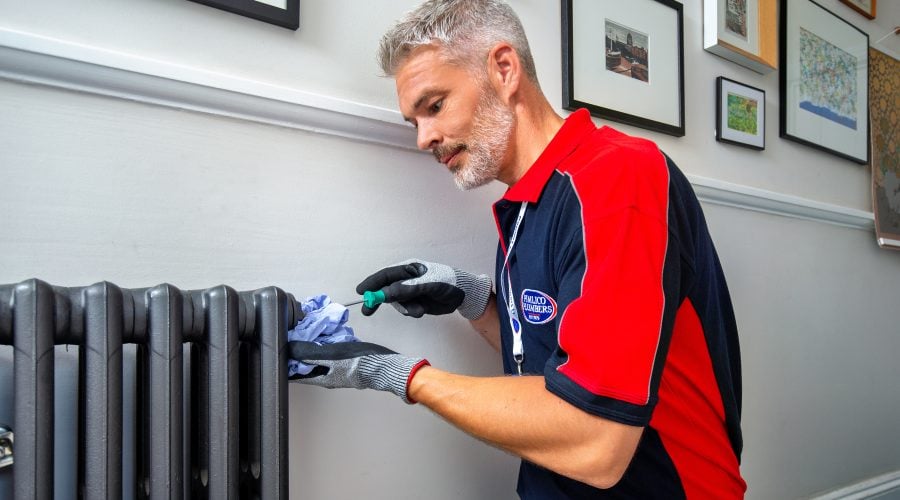
5. Your radiators may need bleeding
Does a radiator feel warm at the bottom but cold towards the top? Trapped air could be stopping hot water from circulating through it properly.
Bleeding the radiator releases the trapped air and can help it heat more evenly.
Remember to check the boiler pressure afterwards, as bleeding one or more radiators can cause it to drop slightly.
If you haven’t bled a radiator before or aren’t confident doing it safely, get a professional to help.
6. There may be a circulation problem
If every radiator is cold but you’re still getting hot water from the taps, the problem may be elsewhere in the heating system.
For example, there could be an issue with the:
- Circulation pump
- Motorised valve
- Heating controls
- Internal boiler components
These faults aren’t suitable for DIY repairs and should be diagnosed by a qualified heating engineer.
7. Sludge could be restricting the system
Heating systems can gradually accumulate sludge and debris as the metal inside radiators and pipework corrodes.
A build-up can restrict the movement of hot water and leave radiators heating slowly, unevenly or not at all.
Signs of sludge can include:
- Cold spots at the bottom of radiators
- Some radiators heat while others stay cold
- Radiators are taking a long time to warm up
- Dark or discoloured water when a radiator is bled
If sludge is affecting the system, it may need professional cleaning. In some cases, a powerflush may be recommended.
What can I check myself?
There are several things worth checking before arranging a heating repair:
- Thermostat temperature and settings
- Batteries in a wireless thermostat
- Heating timer or programmer
- Boiler pressure
- Fault or error codes on the boiler display
- Radiator valves
- Whether the problem affects one radiator, several radiators or the whole house
Even if these checks don’t solve the problem, they can help narrow down the possible cause and give the heating engineer useful information.
Can I fix the heating myself?
That depends on what’s causing the problem.
Simple issues, such as a thermostat being turned down, an incorrect heating schedule or a closed radiator valve, may be easy to put right yourself.
If you know how to bleed a radiator safely, you may also be able to release trapped air without calling an engineer.
However, don’t remove the boiler casing or try to repair internal boiler parts, pumps, motorised valves or gas components yourself.
Any work involving a gas boiler should be carried out by a qualified Gas Safe-registered engineer.
When should I call a heating engineer?
It’s time to arrange professional help if:
- None of the radiators are heating up
- The heating doesn’t respond when you adjust the thermostat
- The boiler keeps displaying a fault code
- Boiler pressure continues to fall
- Radiators stay cold after bleeding
- The heating repeatedly cuts in and out
- You suspect a pump or motorised valve problem
- The boiler keeps shutting itself down
- You’ve tried the basic checks, but still have no heating
A complete loss of heating may need more urgent attention during very cold weather, particularly where young children, older people or other vulnerable occupants are in the property.
Frequently Asked Questions
Why is my hot water working, but my radiators aren’t?
Start by checking the thermostat, heating timer and boiler pressure. If these all appear normal and every radiator remains cold, there may be a problem with the circulation pump, valves, heating controls or boiler.
Why is only one radiator cold?
If just one radiator isn’t heating, check that both radiator valves are open. A radiator that’s cold at the top may have trapped air and need bleeding. Other cold spots can be a sign of poor circulation or sludge inside the system.
Why are my radiators cold at the bottom?
Cold spots near the bottom of a radiator are commonly associated with sludge or debris. The build-up can restrict the flow of hot water through the radiator and prevent it from heating evenly.
Can low boiler pressure cause the heating to stop working?
Yes. Some boilers won’t operate correctly if the system pressure becomes too low. Check the pressure gauge and refer to the manufacturer’s instructions for the recommended range for your boiler.
Should I reset my boiler?
If the boiler instructions recommend resetting it for the fault you’re experiencing, you can try a reset once. If the same problem comes back, repeatedly resetting the boiler is unlikely to solve the underlying issue, and it should be investigated.
Do I need a plumber or heating engineer?
If your hot water is working but the central heating isn’t, a Gas Safe-registered heating engineer will usually be the right person to call. The problem is more likely to involve the boiler or heating system than your general plumbing.
Need help getting your heating back on?
Checked the thermostat, timer, boiler pressure and radiator valves, but still have no heating? There may be a fault elsewhere in the system that needs professional attention.
Our network of Gas Safe-registered heating engineers can diagnose boiler and central heating problems across London and carry out the repairs needed to get your heating working again.
For urgent heating problems, help is available 24 hours a day, 7 days a week.
Contact Pimlico Plumbers if your hot water is working, but your heating isn’t, and you need help getting your home warm again.
Summary
If you have hot water but no heating, begin with the basics: check the thermostat, heating timer, boiler pressure and radiator valves.
When just one radiator is cold, the issue is more likely to be isolated to that radiator. If none of the radiators is heating, there could be a wider problem with circulation, heating controls, a pump, valve or the boiler.
Some causes are simple enough to resolve yourself. If you’ve carried out the basic checks and the heating still won’t come on, arrange for a Gas Safe-registered heating engineer to investigate.