



Why Do Floorboards Creak and How Can You Fix Them?
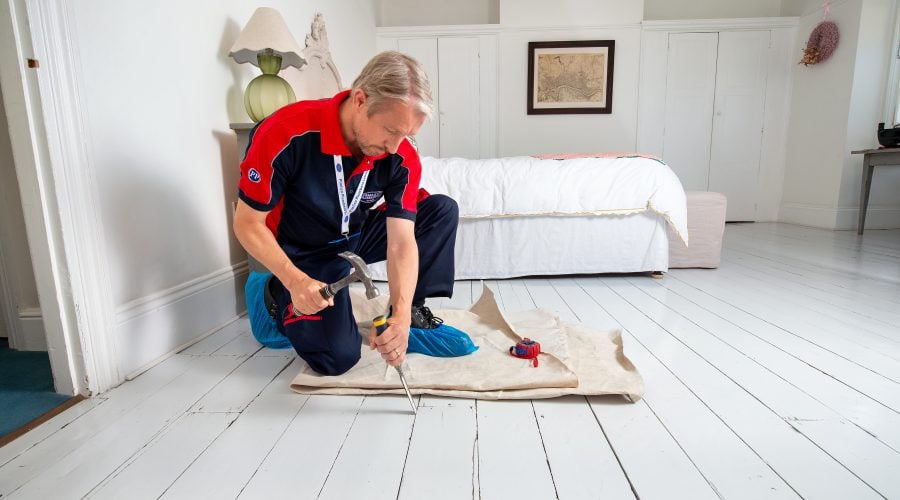
Floorboards usually creak because parts of the floor move and rub against each other when you walk over them. A floorboard could be moving against a joist, neighbouring boards may be rubbing together, or a fixing may have loosened over time.
Changes in temperature and moisture can also cause timber to expand and contract, creating small gaps and additional movement. This can be particularly noticeable in older properties where floors have experienced decades of wear.
A few creaky floorboards aren’t necessarily a sign of a serious problem. However, if the floor also feels loose, unusually springy or uneven, or the creaking has appeared alongside damp or water damage, it’s worth having the cause investigated.
The right repair depends on why the board is moving in the first place.
What causes creaky floorboards?
Loose or moving floorboards are one of the most common causes of creaking.
Traditional floorboards are generally supported by joists underneath. Over time, nails or other fixings can become less effective at holding a board firmly in position. When you walk over it, the board can move slightly and rub against the fixing, joist or neighbouring floorboard.
A gap between a floorboard and its supporting joist can have a similar effect. Instead of being firmly supported, the board flexes when weight is placed on it and moves back again afterwards.
Timber also naturally responds to its environment. Changes in moisture and temperature cause wood to expand and contract, which can change how closely the boards sit together and create additional movement.
The cause isn’t always visible from above, which is why simply adding more screws or nails isn’t necessarily the right solution.
How do you fix creaky floorboards?
The correct repair depends on what’s causing the movement.
If a floorboard has simply become loose, securing it correctly to the supporting structure may stop it from moving and eliminate the noise. If there’s a gap between the floorboard and joist, the repair may instead involve providing better support so the board doesn’t flex when someone walks over it.
Boards rubbing against one another may require a different approach. In some cases, one or more floorboards may need to be lifted so the structure underneath can be inspected properly. This can also reveal whether previous plumbing, electrical or other work has affected how the boards are supported.
The aim should be to stop the movement causing the noise rather than simply trying to disguise the creak.
Can I fix creaky floorboards myself?
Some creaky floorboards can be repaired yourself if the cause is straightforward and you understand how the floor is constructed. For example, a loose board may simply need to be secured correctly to stop it moving.
However, don’t assume that adding a screw or nail will solve the problem. The creak could be caused by a gap beneath the board, movement between neighbouring boards, moisture damage or an issue with the supporting structure.
Water pipes, heating pipes and electrical cables can also run directly beneath floorboards. Don’t drive new fixings into the floor unless you’re confident you know what’s underneath and where it’s safe to fix.
If the cause isn’t obvious, the floor feels unusually springy or uneven, or there are signs of damp or damage, have the area inspected before attempting a repair.
How do I find which floorboard is creaking?
Start by walking slowly across the area and listening for where the noise is strongest.
Try placing your weight on slightly different parts of the floor. You may be able to narrow the noise down to the edge of a board, an existing fixing or a particular area between joists. You may also be able to feel the board moving underfoot.
Once you’ve found the noisy area, don’t immediately drive a screw or nail into it. Pipes and electrical cables can run directly beneath floorboards, so you need to know what’s underneath before adding any new fixings.
If you’re not confident about what’s beneath the floor, stop at identifying the noisy area and have it inspected.
Are creaky floorboards normal?
Some creaking can be normal, particularly in older homes with traditional timber floors.
Timber is a natural material and moves slightly as temperature and humidity change. Floors also experience years of foot traffic, furniture being moved and general wear, so an occasional creak doesn’t necessarily mean the floor needs repairing or replacing.
What’s more important is whether something has changed.
A floor that has always creaked slightly in the same place is different from one that suddenly becomes much noisier, starts dipping or feels noticeably loose or springy underfoot.
If the way the floor feels has changed as well as the sound, it’s worth investigating further.
Why have my floorboards suddenly started creaking?
A sudden increase in noise can happen for several reasons.
Seasonal changes are one possibility. Timber can expand as it absorbs moisture and contract as it dries, changing how closely individual boards sit against one another.
A fixing may also have loosened, a small gap could have developed between a floorboard and its supporting joist, or changes in how the room is being used may have made an existing problem more noticeable.
If the creaking has appeared suddenly and the floor also feels different underfoot, don’t assume it’s simply because the property is getting older.
Can temperature and moisture make floorboards creak?
Yes. Wood naturally expands and contracts as its moisture content and surrounding conditions change.
You may notice timber floors becoming noisier during colder months when central heating is being used more regularly. Heating can make the air inside your home drier, causing timber to lose some moisture and contract slightly. Small gaps can then develop between boards or around fixings, allowing more movement when the floor is walked on.
Some seasonal movement is normal, but persistent damp is different.
If floorboards are exposed to moisture from a leaking pipe, poor ventilation or another source, the timber can swell, distort or eventually deteriorate. Look out for staining, a musty smell, visible damp, soft areas or changes in the shape of the boards.
If you suspect moisture is causing the problem, the source needs to be identified first. Simply securing the floorboard won’t solve the underlying issue if water is continuing to reach the timber.
Can creaky floorboards be fixed without lifting them?
Sometimes. If the problem is simply a loose board and the supporting joist can be confidently located, it may be possible to secure the floorboard without lifting a larger section.
However, lifting a board can sometimes be necessary to understand what’s actually happening underneath. This may be the better option if the board is flexing, the position of the joists is unclear, or there’s a possibility of damage below the floor.
The least disruptive repair isn’t always the one that involves the least investigation. Getting proper access can sometimes result in a more reliable repair.
Can you fix creaky floorboards under carpet?
Potentially, although the floor itself still needs to be assessed.
Carpet can make identifying individual floorboards and joists more difficult because the floor surface isn’t visible. Depending on the repair required, part of the carpet may need to be carefully lifted so the floorboards underneath can be inspected.
Avoid trying to secure boards through the carpet without knowing where the joists, pipes and electrical cables are.
Once the cause of the creak has been dealt with, the floor covering can normally be returned to position.
Can creaky floorboards be fixed from underneath?
Sometimes, if the underside of the floor is accessible.
Access from below can make it easier to see whether there’s movement or a gap between a floorboard and joist without disturbing the finished floor above.
In many homes, however, this won’t be practical because the ceiling of the room below prevents access. The best approach will depend on the construction of the property and the location of the noisy section.
Do creaky floorboards mean there’s a structural problem?
Not necessarily. Creaking is commonly caused by relatively minor movement between floorboards, fixings and joists rather than structural damage.
However, pay attention to how the floor feels as well as how it sounds. A floor that’s noticeably bouncy or springy, has started sagging, feels soft in places or has become uneven should be investigated.
This is particularly important if the change has happened recently or you’ve also noticed signs of damp or water damage. In these situations, the supporting floor structure may need to be checked to establish what’s causing the movement.
Can a leaking pipe cause creaky floorboards?
Potentially.
A leak beneath the floor can expose floorboards and supporting timbers to moisture. Over time, this can cause the wood to swell, distort or deteriorate.
The first sign isn’t always water coming through the ceiling below. You may instead notice a musty smell, staining, increased movement or a change in how the floor feels underfoot.
If you suspect a leak, the source needs to be found and repaired before any resulting damage to the floor is addressed. Otherwise, repairing the floorboards without dealing with the water will only treat part of the problem.
Do creaky floorboards need replacing?
Usually not. A creaking floorboard may simply need to be secured or supported correctly. Replacement is more likely to be necessary if the timber itself has split, deteriorated or been damaged by prolonged moisture exposure.
If one board is damaged but the surrounding floor remains sound, repairing or replacing that individual section may be enough. More widespread deterioration may require a larger area of the floor to be addressed.
An inspection can help establish whether the floor needs adjustment, repair or replacement.
When should I call a carpenter about creaky floorboards?
If the noise is persistent, several boards are moving, or you can’t confidently establish what’s beneath the floor, a carpenter can assess the area and identify the right repair.
Professional assessment becomes more important if the floor is sagging, unusually springy, uneven or showing signs of moisture damage.
You should also avoid attempting to secure the floor yourself if you don’t know where pipes or electrical cables run beneath the boards.
A carpenter can investigate why the floor is moving and determine whether it needs securing, additional support, repair or replacement.
Frequently Asked Questions
Why do my floorboards creak?
Floorboards usually creak because parts of the floor are moving and rubbing against each other. A board may be moving against a joist, neighbouring floorboard or fixing, while changes in moisture and temperature can also cause timber to expand and contract.
Are creaky floorboards a structural problem?
Not usually. Many creaky floors are caused by relatively minor movement or loose fixings.
However, if the floor is also sagging, feels unusually bouncy or has become noticeably uneven, it’s worth having the supporting structure inspected.
Why do my floorboards creak at night?
Timber can make noises as the temperature and humidity inside your home change. Because wood naturally expands and contracts, you may occasionally hear floorboards creak even when nobody is walking across them.
If the floor also moves heavily underfoot, feels uneven or has suddenly become much noisier, there may be another cause worth investigating.
Can creaky floorboards be fixed without removing the floor?
Often, yes. A localised loose board may be repairable without removing a large section of flooring.
In other situations, lifting one or more boards may be necessary to identify and properly repair the cause.
Can a carpenter fix squeaky floorboards?
Yes. A carpenter can inspect the floor, identify where the movement is occurring and determine whether the boards need securing, supporting, repairing or replacing.
Tired of creaking floorboards?
A creaky floor can be irritating, but it doesn’t necessarily mean your floor needs replacing.
Pimlico Plumbers provides floor repairs and installations across London, with experienced carpenters able to assess noisy or damaged flooring and identify what’s causing the problem.
Whether you have loose floorboards that need securing, damaged sections that require repair or flooring that needs replacing, establishing the cause first can help make sure the right work is carried out.
Our carpentry work also comes with a 12-month workmanship guarantee, giving you added reassurance once the job is complete.
Got a floor that creaks with every step? Get in touch to arrange a carpenter and find out what’s causing the problem.
Summary
Floorboards usually creak because movement is causing the boards, fixings or supporting structure to rub against each other. Loose fixings, gaps around joists and the natural expansion and contraction of timber are all common causes.
A creaking floorboard doesn’t necessarily need replacing. Depending on the cause, securing or supporting the affected board may be enough to stop the movement and reduce the noise.
If the floor is sagging, unusually springy, uneven or showing signs of moisture damage, have it investigated. And before attempting a DIY repair, remember that pipes and electrical cables may be hidden beneath the floorboards.