Planning a new kitchen is an exciting prospect. But before it starts to take shape, it helps to know exactly what to consider. After all, renovations and remodels are big investments, and overlooking some details can lead to costly mistakes and niggling regrets.
Not to worry, though. This guide walks you through the key things you should know, from kitchen errors to avoid, to the design considerations to keep in mind—and why working with a specialist renovation service can ensure your vision is delivered without stress.
What’s the difference between a
kitchen renovation and a
kitchen remodel?
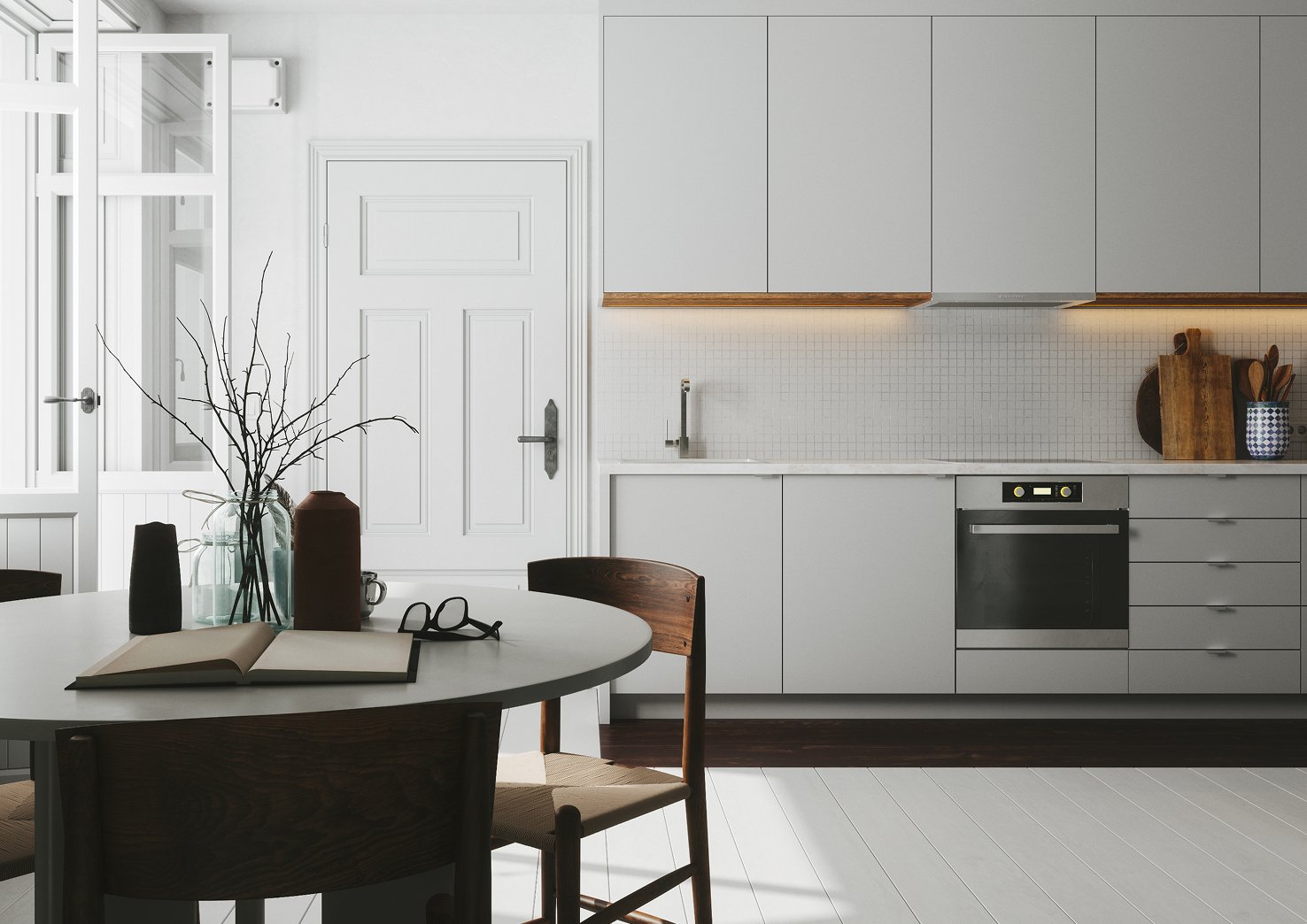
Kitchen renovations and kitchen remodels. They sound similar, but they’re actually two different approaches entirely.
Kitchen renovations typically focus on updating or improving existing features without altering the core layout. This could include upgrading fixtures, finishes, and appliances to refresh your space or address minor issues. Renovations usually require fewer resources and rarely need major permits, too.
A kitchen remodel, on the other hand, goes a few steps further by altering the structure, layout, and style of your entire kitchen. This often means new floor plans, electrical and plumbing upgrades, or an extension.
Common kitchen mistakes to avoid
Most kitchen mishaps come from overlooking practical considerations. Here are some of the most frequent mistakes to watch out for:
Overlooking ventilation
Want to keep your kitchen smelling fresh? Efficient ventilation is key. Without it, unwanted smells can quickly spread throughout your home.
The downdraft extraction hob is a proven solution. These appliances remove the steam and odours from pots and pans as they rise, stopping them from drifting into open-plan spaces.
They’re also much quieter than traditional overhead hoods—ideal if you love to cook and host.
Ignoring workflow
A kitchen workflow describes how you move through the space while cooking, cleaning, and entertaining. Whichever layout you’re considering, a helpful starting point is positioning the sink first, then placing the cooking unit and fridge within easy reach. This is known as the kitchen triangle, and it’s designed to make your space more efficient and safer by reducing the distance between key tasks.
Following trends blindly
Trends can be great sources of inspiration, but it’s better to focus your attention on high-quality features that will last. After all, trends come and go, while well-made appliances, fixtures, and finishes will stand the test of time and help keep your kitchen running efficiently.
Forgetting about the future
A kitchen renovation is a long-term investment, so it’s worth giving thought to how your kitchen may best serve future you. For instance, if you’re hoping to entertain guests, you may want to consider an open-plan kitchen for hosting. Have plans to start a family? Now’s the time to think about easy-to-clean surfaces and child-friendly layouts.
Skimping on installation
While you might fancy a DIY challenge, completing a kitchen remodel or renovation by yourself can be risky. Structural changes, plumbing and electrics, and many other tasks require technical expertise, and handling them yourself can lead to costly and potentially dangerous mistakes.
That’s where hiring an experienced specialist renovation service comes in. At Pimlico Plumbers, our network of over 230 skilled tradespeople and dedicated project managers is on hand to ensure every detail of your kitchen is safely and efficiently installed.
Key considerations when designing
your kitchen
Before selecting lighting, cabinetry, or finishes, it’s worth taking a step back to consider what you want your kitchen to do, how you want it to feel, and how it will support your day-to-day life.
Start by creating a wishlist
This is the moment for blue-sky thinking. Start by jotting down every feature you’d love in your dream kitchen, as well as everything in your current space that isn’t working.
Social platforms like Instagram and Pinterest are great for inspiration, as are interior brochures and magazines. You can also visit our showroom to see the latest interior kitchen designs.
Consider the perfect layout
A functional layout is just as important as the aesthetic. Keep the sink, fridge, oven, and hob within easy reach, and position storage around the areas you use most.
Consider natural light and how people move through the space, keeping the main walkways clear of the cooking zone. If you’re planning seating, placing it near windows often works well.
Choose suitable cabinetry
Cabinetry sets the tone for your whole kitchen. Consider how you want the space to look and feel, and how it fits with nearby rooms and your home’s overall style. You could even collect images that inspire you and refine your ideas from there, keeping in mind how they would fit with your property’s architecture and period.
Pick your colours
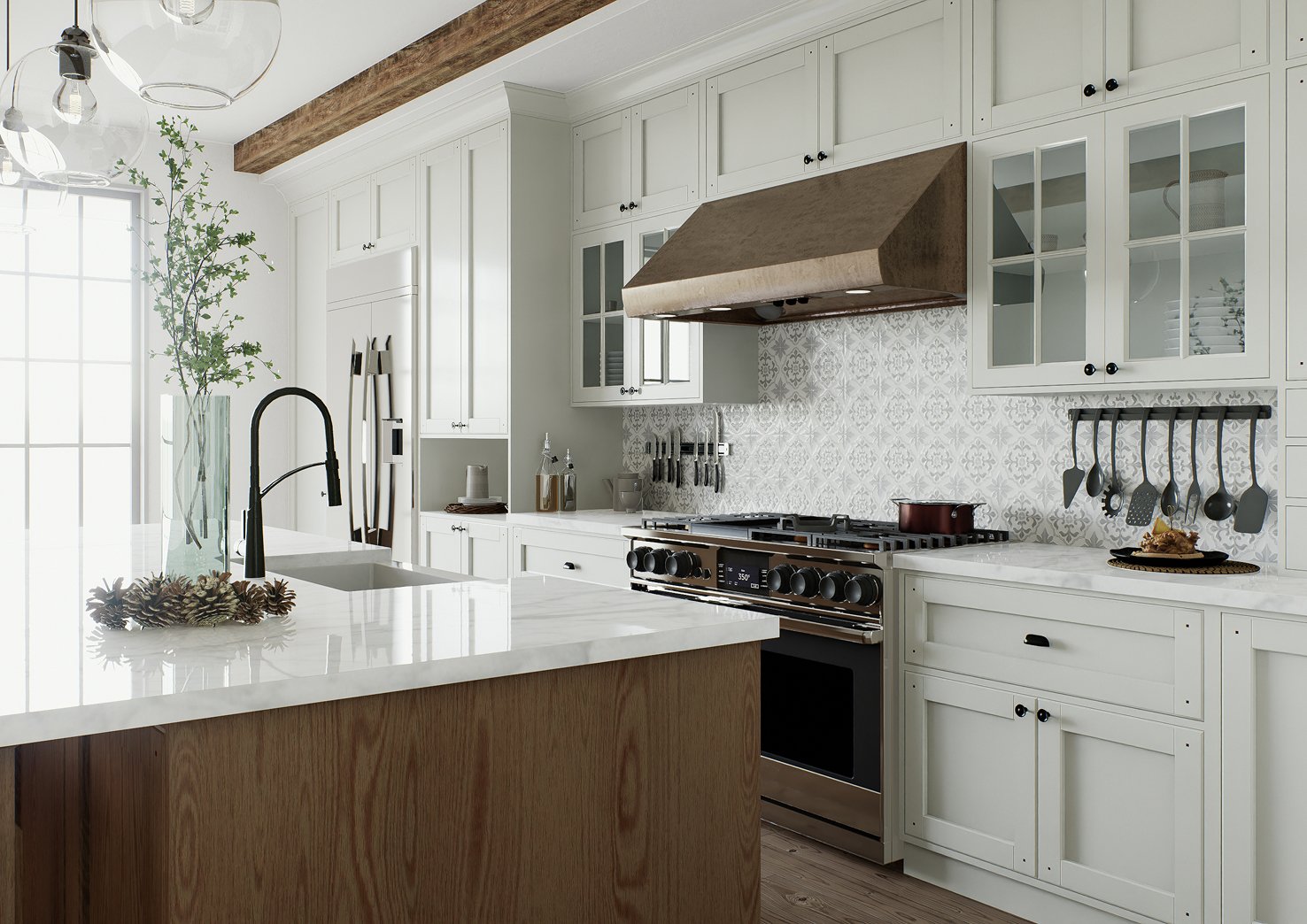
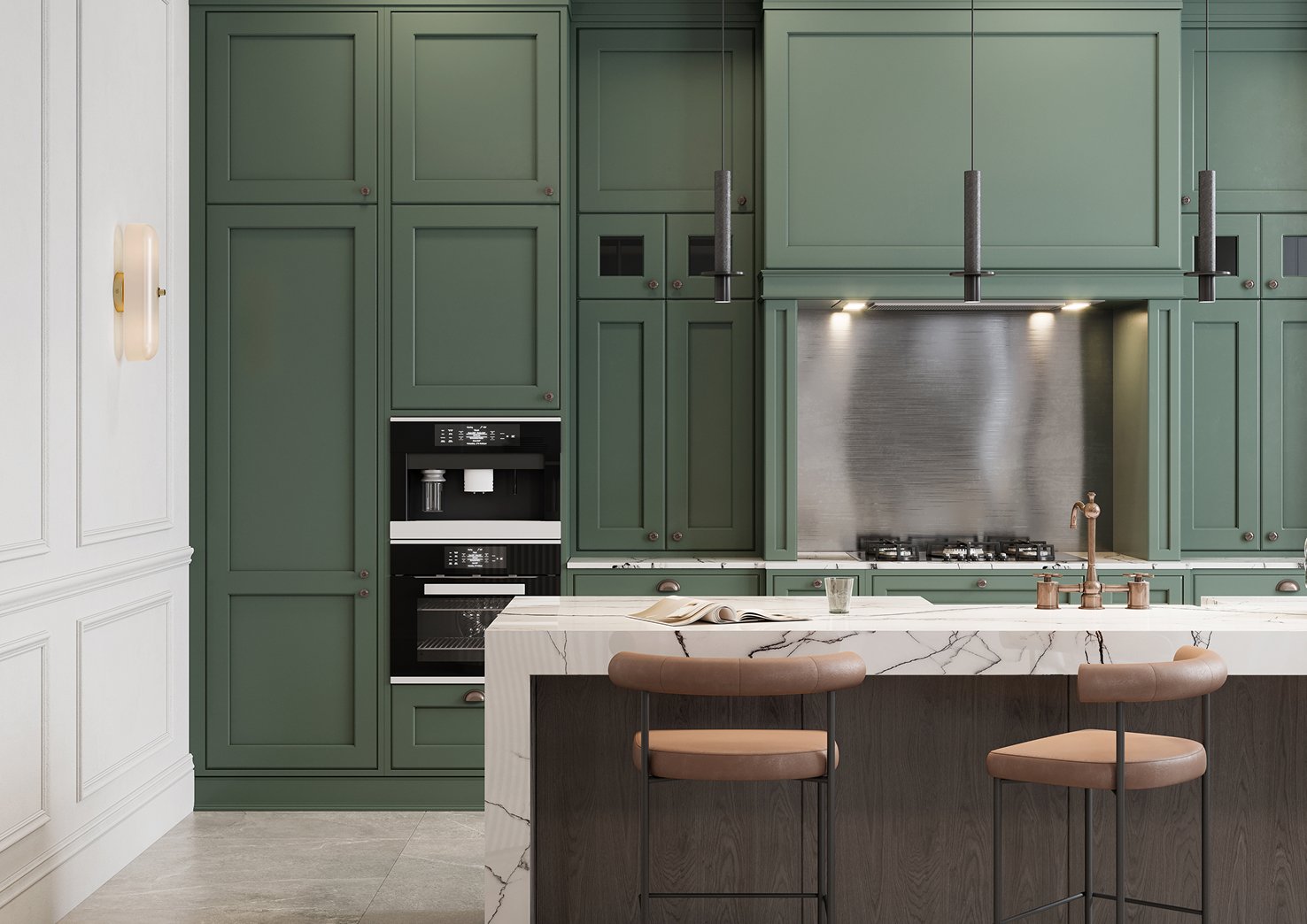
Neutral colour schemes are no longer the default. Today, many homeowners embrace bolder, more characterful palettes. Shaker cabinetry remains a firm favourite because it pairs beautifully with contrasting paints, coloured frames, or statement handles. Warm or bright wall colours can energise a busy kitchen, while pops of colour on stools, shelves, or cabinet fronts can add personality and flair.
Factor in appliances
Not all appliances follow the standard 60cm width. Larger options, like 76cm ovens, 90cm fridge-freezers, or 1.5m range cookers, may need additional space. You might also want to consider allowing room for luxury features, such as warming drawers, steam ovens, modular hobs, or wine coolers.
Extraction has evolved, too. These days, you can choose from wall-mounted or ceiling-mounted hoods, concealed designs, downdraft systems, or hobs with built-in extraction.
Think about countertops
The amount of countertop space you need often depends on how you use your kitchen. As a guideline, aim for at least 600mm of space on either side of your sink and hob for prep and plating, and leave a clear area near the oven for hot dishes.
Countertops also make a big visual impact, so choosing the right material is important. Some of the most popular options include:
- Quartz: Durable, non-porous, stain-resistant, and easy to maintain, with consistent colouring and marble-effect designs. Many modern ranges include recycled content.
- Marble: Beautiful but porous and prone to staining, making it less practical as a worktop.
- Porcelain: A man-made, non-porous material with high heat and stain resistance.
- Granite: A natural option with unique patterns and strong durability once sealed.
- Solid surface (e.g., Corian): Smooth, warm to the touch, and mouldable into seamless shapes.
- Timber: Warm and characterful but requires careful upkeep. Often used alongside other materials for a mixed worktop look.
Plan a kitchen island
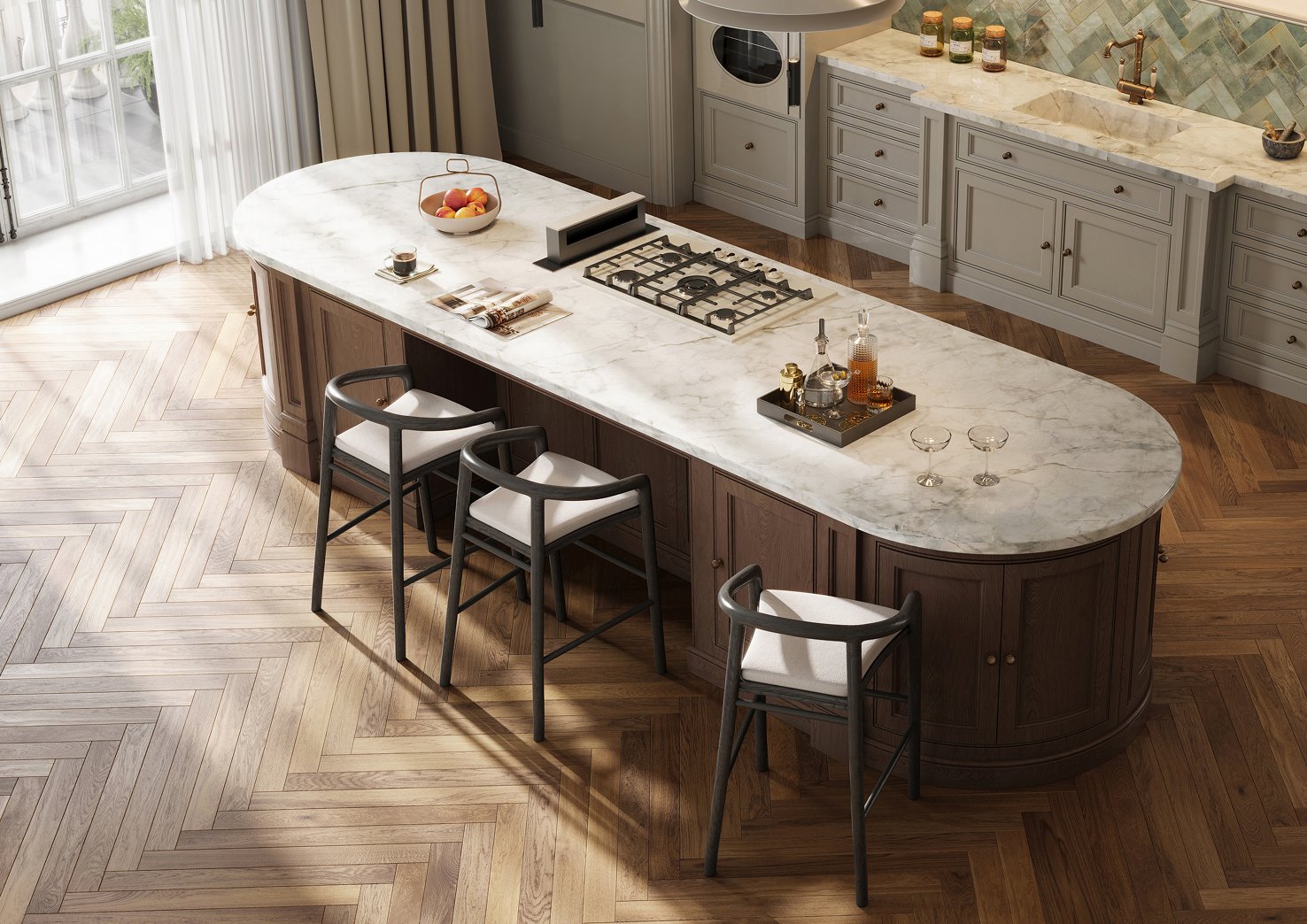
If you’ve got the space, kitchen islands can be a wonderful addition to the heart of your home. Not only do they provide a practical space for your sink or hob, but they’re also social spots for when you’re hosting, or cooking, and prepping.
A standard kitchen island is typically 2-3m long and 1.1-1.4m wide—anything wider tends to leave dead space in the middle.
Leave at least 1m of clearance around all sides and add more if the route is to be used as a walkway. If you’re planning on adding seating, factor in the depth of bar stools, as many don’t tuck fully under the countertop.
Factor in kitchen lighting
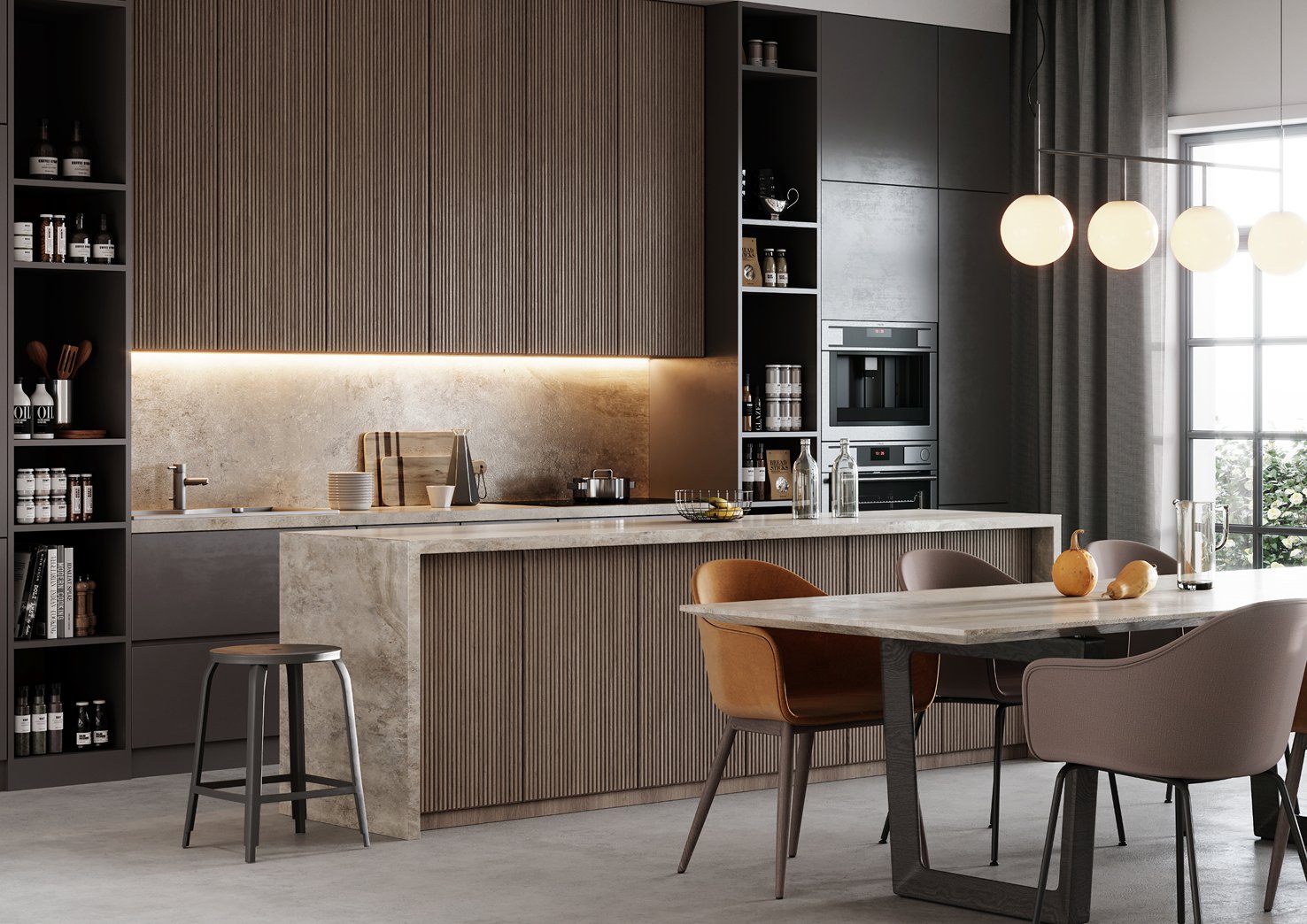
Lighting sets the mood for your entire kitchen, and in luxury spaces, layered lighting works particularly well. For example, use overhead spotlights for general tasks, LED strips under wall cabinets for prep work, and statement fixtures above the island or dining area to add style and focus.
Choose kitchen flooring
A kitchen floor should be durable and easy to maintain, but it also plays a key role in the overall look of your space. Here are some of the most popular options:
- Porcelain tiles: Robust, non-porous, stain- and scratch-resistant, and compatible with underfloor heating.
- Stone-look tiles: Soft, matt limestone styles that create a warm, relaxed feel.
- Wood-effect tiles: Realistic textures that add movement and character to the space.
- Encaustic-look porcelain: Offers the powdery aesthetic and pattern of traditional encaustic tiles with easy maintenance. You can also create bespoke floors by combining different shapes.
- Real stone: Distinctive and beautiful, but prone to staining and weathering, requiring regular upkeep.
- Real wood: Full of character but needs regular maintenance and protection from standing water.
- Engineered timber: More stable than solid wood but still vulnerable to damage from standing water.
- Laminate: Affordable, durable, and stable, though it may be less natural-looking if that’s your aim.
- LVT (Luxury Vinyl Tiles): Waterproof, durable, and thin, making them ideal when floor build-up is limited
Get specialist support from a
luxury kitchen renovation specialist
Hopefully you have a clear idea of what goes into planning and designing a luxury kitchen. But now comes the tricky part: delivering every detail so it looks beautiful and runs efficiently.
That’s where we help.
Covering all 32 boroughs of London, Pimlico Plumbers offer a complete range of renovation services to deliver your kitchen plans with precision and care.
With our network of over 230 experienced trade professionals, we’re here to manage your renovation from start to finish. Having every trade in-house not only makes your project more convenient, but it can also reduce the time it takes to complete your kitchen.
Already working with an architect or interior designer? That’s fine, too. We can collaborate with them directly. Or, if you’d prefer to manage the project yourself, we can act solely as your installer while you stay in control.
Whichever approach works for you, the result is always the same: expert home renovations carried out to the highest standards. That’s the Pimlico Plumbers difference, and why we’re London’s leading service for home repairs and maintenance.
Get in touch today.